

1·
22 hours agoIt’s a really loose reference, but lots of programming languages are “garbage-collected”: https://en.wikipedia.org/wiki/Garbage_collection_(computer_science)
It’s a really loose reference, but lots of programming languages are “garbage-collected”: https://en.wikipedia.org/wiki/Garbage_collection_(computer_science)

One thing that, uh, amuses(?) me is that apparently there’s still a national emergency from 9/11: https://www.federalregister.gov/documents/2025/09/03/2025-16941/continuation-of-the-national-emergency-with-respect-to-certain-terrorist-attacks
You know how Hitler rose to power by abusing a national emergency regulation? You know how there was worry of Trump doing a fascism, back when Obama handed over to the guy? You know how Trump literally announced beforehand that he’ll do a fascism, when Biden handed over to him?
Both could’ve chosen to terminate the national emergency. Neither did so.
https://www.courthousenews.com/biden-extends-9-11-state-of-emergency-by-a-year/
I guess, this is different from automating a part of your workflow every so often, in that you don’t yet know the surrounding context. It is the point to just dick around with some new context for a bit.
And if you get bored of it, i.e. you’ve learned enough about the new context, then you can just archive the repo and move on, because you don’t actually need it as a solution.

It’s this game jam: https://gamemakerstoolkit.com/jam/
What’s perhaps not as obvious from that page, though, is that Game Maker’s Toolkit is primarily a YouTube channel, which just organizes these game jams as a side thing.

In our current legal system, copyright is the basis for me to be able to set requirements on how my code can be shared. I do not care that I own it, I just care that it is shared under the conditions I set.
Without being able set these conditions, I would not open up my code.
As a developer, you hold the copyright to your code. When you make it open-source, you grant a license to use the code and the resulting program under certain terms.
This is a contract. If you copy my code without following these terms, then that’s theft.
The Internet Archive’s use complies with these terms for all open-source licenses. These AI companies do not. In particular, here’s a quote from the MIT license, which you will find in a similar wording in all open-source licenses:
The above copyright notice and this permission notice shall be included in all copies or substantial portions of the Software.
In effect, what this means, is that when you copy my code, I demand that you also copy the license text along with it, so that anyone else looking at this code knows the permissions I grant and the terms I require.
And now guess what these AI companies are doing. They copy my code and reproduce substantial portions upon a user asking, yet they do not include my license terms. They violate the contract under which they obtained my source code.
I suspect you don’t realize how shit that is, because source code is so abstract.
It’s like spending hundreds of hours painting a great artwork and then deciding that everyone should be able to give a copy to everyone they know, under the simple condition that they inform those people that they have this right as well.
And then comes along a company and sells my artwork for money, without informing their customers that they can pass it on for free. That’s, plain and simple, a criminal operation.

I think, something to be aware of is that it’s not just shade. It’s not just cooler below the tree. Trees also store and evaporate water, which cools the whole area. This summarizes the cooling effect quite well:
Tree implementation reduces peak monthly temperatures to below 26 °C in 83% of the cities. Trees can lower pedestrian-level temperatures by up to 12 °C through large radiation blockage and transpiration.
https://www.nature.com/articles/s43247-024-01908-4
And well, ultimately if we accept that climate change is a thing, planting trees now is the cheapest investment we can make to combat the heatwaves in 10+ years from now.
It will reduce heat deaths. It will reduce AC costs of everyone living there. And it will mean that the city doesn’t lose out on taxes from people choosing to stay inside during a heat wave.
Trees are quite effective at slowing down winds, so planting more trees than before is exactly the right response. 👍
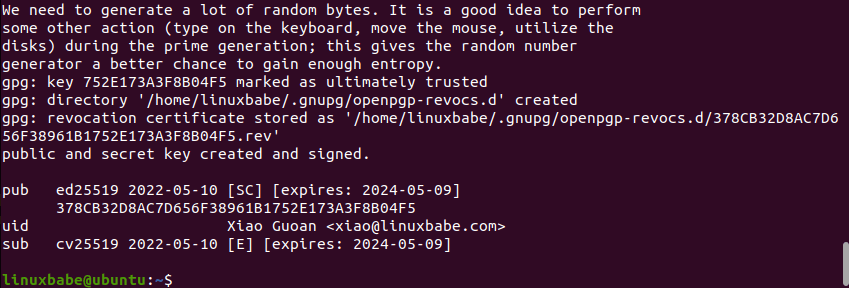
It’s GPG that you’re probably thinking of:
if you know how to write decent C, you’ll have a much easier time of understanding PostgreSQL internals, for example, while if you’ve learned React, it’s anyone’s guess as to whether or not that’ll actually improve your HTML skills, for example.
I mean, there’s also a much more mundane reason why C comes up more often: It doesn’t use a runtime environment, so a library written in C can be called from virtually any programming language.
For the longest time, if you wanted to write a cross-language library, C and C++ were pretty much your only choices.
Rust is now entering that circle and I do think, it will start showing up in lots of places, too.
But perhaps another reason why mastering C is more educational than mastering other languages, including Rust: C hardly abstracts from how the hardware works, so you’re not just mastering C, you’re also mastering hardware.
Other programming languages ultimately get executed on that same hardware as well, even if lots of abstraction layers are in between, so that knowledge still keeps being relevant every so often.
Kind of weird that this is now just how we depict a T-Rex. Like, we know that the thing likely had feathers. This meme specifically references that it was the ancestor of a bird. Surely anyone who gets this meme wouldn’t be surprised that the T-Rex had feathers.
But if you actually depicted it with feathers, then no one would know that it is a T-Rex that you’re referencing. You have to depict it naked for the meme…
I like how they have a thicker piece of wood for holding up the roof than for holding up the deck + roof.
Why leave your desk? Your fear of looking ridiculous when peeing in a bottle is a skill issue.
Yeah, there’s a lot of unhinged stuff in this post, but that was the wildest to me. The junior isn’t taking your ‘genius’ away, if they hear it. The opposite would be the case, because it sharpens your mind when you get to explain the nitty-gritty to someone with a new perspective.
I use “Air Hockey Saloon” by Chris Zabriskie. Certainly more on the gentle side.
https://archive.org/details/2009_-_2014-16921/Chris_Zabriskie_-_08_-_Air_Hockey_Saloon.mp3
(It’s under Creative Commons: https://chriszabriskie.com/vendaface/ )
Figured out why cross-compilation for Windows wasn’t working. So, now there’s release binary available for that, too.
Completely untested, good luck.
Cross-compiling for macOS is prohibited by Apple, so even more good luck to you guys. 🫠
Yeah, I thought the blog post was gonna be about horror stories, because even the greatest senior/architect/whatever will push absolute garbage into your codebase, if they don’t have the time to familiarize themselves with how the code actually works.
Even if it’s some isolated component, if they implement it without explaining the what and why to others, then no one else can maintain or debug that. And you do not want to rely on your super important guy to have the time to fix things when production grinds to a halt.


100k lines and you don’t yet have a design that’s mostly settled?
5 minutes sounds like way too much, unless you mean a fresh compile. But then you shouldn’t need to wait that long between changes, since incremental compilation should kick in then.
And like sure you can break shit up into crates to speed up compilation, but to do that you already have to have a design you’re happy with and that’s stable.
I mean, if you have your modules structured in a tree structure and with proper visibility, then it isn’t a particularly big leap to put it into a separate crate. You just move the files, maybe fix some visibility modifiers still, and then a bit of boilerplate to add it to the workspace.
It’s only really when you’re publishing to crates.io, that you don’t particularly want to keep changing the names/scopes of the crates, as they’ll stick around on there for the foreseeable future.


I enjoy how there’s the correct answer, and then there’s the other answers in this thread. 🙃