

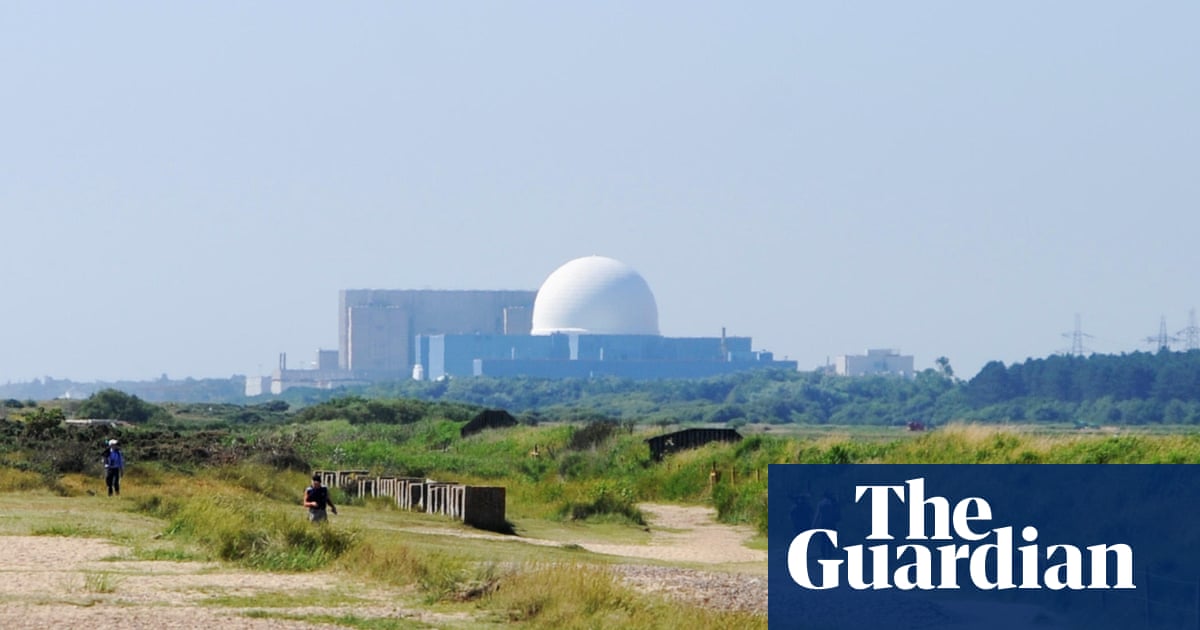
The motion, adopted at conference, removes a “blanket opposition to nuclear fission” and instead commits the Green party of England and Wales to assessing nuclear projects alongside other low-carbon technologies.
Its electricity generation policy still prioritises offshore wind, onshore wind and rooftop solar as the primary sources of electricity, but allows elected representatives to support new nuclear reactors on a case-by-case basis.
This was one or the few areas I didn’t align with the Green Party before, as I believe that a bit of nuclear is kind of necessary to help round out less consistent energy sources as things stand. I think this is a reasonable stance.
Well, yeah, I agree with that.
But I’d argue that it draws from the same limited funding pool as renewables and other climate-important research.
The latter is urgent. We may not get to the point of effectively utilizing fusion unless we stabilize the planet, and the damage would be priceless. So if we have to trade one for the other, I’d say the bulk of funding should be diverted away from fusion and towards faster solutions, ones more immediately cost competitive with oil.
It’s not that we shouldn’t research it, eventually. There’s lots of long horizon concerns. But factoring in the time horizon is very important, and reducing emissions is needed yesterday.
The funding for fusion and renewables research don’t really overlap. The renewables technology is already ready, it’s just adoption that needs to take place. Fusion is nowhere near adoption, and the funding for that is the same type of funding going towards space flight and CERN. Society is more than capable of adapting renewables right now, the hold up isn’t fusion research or nuclear, but fossil fuel giants and their immense financial and lobbying capacity.
But more research into renewables (new solar cells, turbine designs, geothermal drilling techniques and such) makes them even more cost competitive, which puts immense pressure on fossil fuels. That highly experimental stuff competes with fusion for funding, and is something manufacturers aren’t necessarily able to pursue.
Renewables are of course cheaper in some cases, but if renewables were drastically cheaper with breakthroughs, I think lobbying would only get fossil fuel companies so far.
Funding for fusion is tiny - like most non-commercial research funding - and not really relevant.