
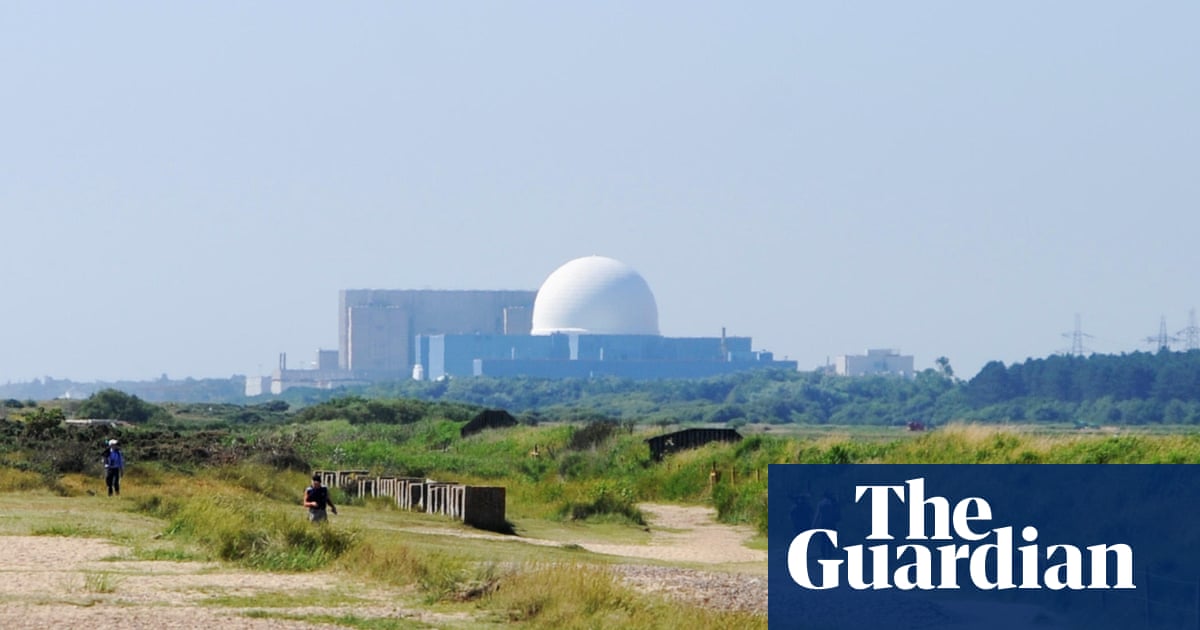
The motion, adopted at conference, removes a “blanket opposition to nuclear fission” and instead commits the Green party of England and Wales to assessing nuclear projects alongside other low-carbon technologies.
Its electricity generation policy still prioritises offshore wind, onshore wind and rooftop solar as the primary sources of electricity, but allows elected representatives to support new nuclear reactors on a case-by-case basis.
This was one or the few areas I didn’t align with the Green Party before, as I believe that a bit of nuclear is kind of necessary to help round out less consistent energy sources as things stand. I think this is a reasonable stance.
Nuclear was great 50 years ago. Now it’s a way for the fossil fuel lobby to keep a country using fossil fuels for another 20 to 30 years because reactors take way too much time to be built.
The only reason to get a nuclear reactor is to defend your country against imperialism. Else building solar panels and wind instantly generates electricity instead of having to wait decades
I see that they’re passing round the nuclear Kool Aid. Remember kids: it’s radioactive for thousands if not millions of years. And in the UK there’s no plan for what to do with the waste. Drink up!
Millions of years huh? Which material would that be, specifically? Since you’re clearly an expert on the subject.
Also, breeder reactors exist. They literally re-process the spent fuel for more power.
Breeder reactors are conceptually cool but nowhere near economical enough to be a practical solution at present. Only two still exist in the world, and both are operated in russia - they were phased out for a reason.
Regardless, to run a breeder reactor you still need to separate out fission products from the waste, which we havent been doing since the 60’s or 70’s. The sensible thing to to with fuel is to reprocess it by PUREX/SANEX like we used to. But unfortunately we now have this giant build-up of screaming-hot unprocessed waste
Which one would you like me to pick? How about Iodine-129 with 15 million or so years?
Have you been reading Russian propaganda again? Breefer reactors. Next you’ll be spouting the benefits of cold fusion for skin care.
There is a plan. It’s putting it in the ground where it’s perfectly safe, just like the radioactive ore that’s also down there.
So, you know that all the existing waste in the UK isn’t in the ground. It’s been in temporary storage at Sellafield for decades. No plans to bury it just yet.
True, however the fact that nuclear power has been around 70 years and we’ve still never been able to actually do this is a valid criticism. Even if the limited number of deep geological disposal projects all come online today, we’ll still be generating high-level waste much more quickly than we can bury it
It’s radioactive before you dig it up, and it’s radioactive after. The difference now is that we have the tech to keep using it as fuel after it’s “done”.
So it’s ok to handle radioactive waste… with a shovel?
The vast majority of the process is automated. I used to work with a guy who designed and tested nuclear plant automation. Makes Satisfactory look like stacking wood blocks.
It is far, far more radioactive afterward.
After fuel has been in-pile for a full lifetime, it has fissioned, decayed and transmuted to the point where half the periodic table worth of radioactive isotopes have been produced and are all present in the same waste
I mean, it’s called enriched uranium for a reason. 😅
Here’s a radical idea- store it.
Give that man a job! So, where are we going to store this utterly toxic material? If you bury it there’s a chance it’ll leak into the water supply. Maybe launch it in missles at at the moon?
I don’t mean to be an absolutists and say it could never under any circumstances leak if handled poorly, but even if you just dumped it in a hole in the ground the odds are against that.
We primarily don’t have long term storage for us becuase it’s too valuable and we’re only currently using a small percentage of its potential energy. In other words we are not done with it.
Long term storage that exists like Yucca Mountain are heavily engineered to remove risk.
But if we’re talking about great brittian I mean, build storage on the French model, or pay France or the US for storage, or just do what you always do and toss the damn things into the Thames.
That makes sense. Once nuclear is built, using it is a no-brainer: you’ve already paid for it, so saying no to energy produced at the costs of a few truckloads of fuel a year is purity politics at its most asinine. Building new nuclear plants, with their high capital costs and long lead times, is another question altogether.
Nuclear is unaffordable so it doesn’t matter.
Solar plus batteries are by far the most cost effective and reliable method at the moment but we do have to keep investing in research on all technologies except dirty stuff that releases insane amounts of pollution and CO2.
True, and that means there needs not be an ideology ban of nuclear. We should just do whichever option that’s the best, and that won’t be nuclear.
Opposing nuclear power plays into the hands of the fascists.
There’s truth in this, but there is also a certain subset of internet users which obnoxiously gloss over all of the challenges and limitations of nuclear fission, pretending that it’s a flawless energy source to the detriment of everyone’s sanity
a bit of nuclear is kind of necessary to help round out less consistent energy sources a
I really don’t get how this argument still flies after all these years. From an economical perspective, nuclear is the worst type of energy generation you can pair renewables with. Putting the still unsolved nuclear waste debate aside for the moment, building nuclear plants is massively expensive and takes a lot of time, which is the exact opposite of what would complement renewables: Cheaply built capacity whose stand-by cost must be as low as possible.
Nuclear reactors need subsidies throughout its lifetime to compete with renewables on price and they need to run constantly.
Renewables already push the energy price into the negatives during peak production, so what you really need is batteries that can smooth out energy prices over a day or bridge a day with bad energy production, as well as energy generation that is cheap to build and keep in reserve, like gas plants that can burn a hydrogen mix.
When it comes to the economics, all nuclear power plants do is drive up the price set by renewables. England may have need for some nuclear power plants to keep up their stockpile of nuclear weapons, but when it comes to energy generation, hydrogen-burning powerplants will fit the need of renewable energy production much better in tge future.
Saying nuclear is unfeasible because building new plants is too expensive and takes too long is like saying swimming is too hard; but then it turns out you insist on carrying a 100lb anchor whenever you get in the water.
The reason it’s expensive and takes a long time is because of the absolutely massive amount of red tape built up over the years. Some red tape is obviously a good thing, but fear around the word “nuclear” has caused so many unnecessary regulations, committees, and testing that it causes plants to take 5x what they should cost and 10x the time.
Literally having to build safety mechanisms and procedures for failures that aren’t even physically possible. All because the average person knows jack shit about nuclear power.
And who do you trust to cut down the red tape? The conservatives that promised to cut red type through brexit? Only to increase it many-fold after they were confronted with the reality everyone warned them about, that completely divorcing from the EU single marketwould be ruinous for the UK, so they were forced to put in place a bunch of half-measures to still keep access to the EU.
And what red tape are we talking about? There must be a list of unecessary red tape. I’d like to see a public debate around what rules to cut, rather than trusting the next conservative promising to just get rid of all the bureaucracy.
You’re not exactly wrong, nuclear is a terrible pairing with renewables for the reasons you listed, but it’s still probably cheaper than batteries under extreme conditions, which is something we do have to deal with.
90% renewables is cheap, 99% is more expensive, 100% is really really expensive. Batteries are great for 24 hour storage, but storing energy for longer starts to become uneconomical and to hit 100% you have to buy enough capacity for the absolute worst case scenario. Anything that baseline nuclear cuts off from renewable demand is potentially cheaper than the theoretical worst case 1% of renewables (eg if there’s no wind and it’s cloudy mid-winter, how much solar/wind do you need to power the country, or how much battery do you need to maintain power for weeks under these conditions?).
Batteries are cheap and getting cheaper every day.
Solar + battery are already cheaper than every other option. Sodium batteries are getting close to lithium in energy density while using much cheaper materials that are easily attainable worldwide and they have almost zero chance of combustion.
That can all be true without contradicting what the comment above says.
This is all true, and if it continues maybe batteries will become cheap enough for 2 days of storage. But seasonal variation will always be beyond their grasp.
The funny thing is, every form of electricity production is better when coupled with batteries, even Nuclear. Because you can keep your power plants in the optimal production range.
That is exactly why I said that under current economic forces, building hydrogen-capable gas plants is the most cost-effective way of dealing with longer, but much rarer periods of low renewable energy output. They combine “low” standby costs and can be throttled within minutes.
Yes, hydrogen might turns out to be capable of that use case too.
How easy is it to recycle batteries?
For most type of batteries, relatively “easy”, that means you will recoved 99% of resources. The cost can be somewhat prohibitive, as using newely refined base materials can be cheaper.
Wikipedia is a good place to start if you are interested!
It’s frustrating to know that the cost being anything other than “cheaper” means that too many won’t be recycled.
This was one or the few areas I didn’t align with the Green Party before, as I believe that a bit of nuclear is kind of necessary to help round out less consistent energy sources as things stand. I think this is a reasonable stance.
Not to be too much of a dick but this is pretty typical of the pro-new nuclear mindset.
You “believe”? You don’t have to believe, there is plenty of hard data showing that new nuclear is a massive waste of money now renewables and storage are so cheap.
I think this is a reasonable stance.
It’s not, unless you want to pay more for electricity for absolutely no reason other than because you feel like you should.
I might just be behind the times.
I look over at France, who have managed to keep their energy prices low and keep their independence thanks to their large amount of Nuclear energy, and I’m jealous.
Maybe we have fixed the energy storage issue now, and I’m just not aware of it. It’s not my area of expertise.
I genuinely want us to have more renewables, but I was still under the impression that you needed a “base” energy source to round things out. I don’t want that to be coal or gas, so nuclear seems like the lesser evil.
But if that’s no longer an issue, then great!
nuclear is a massive waste of money now renewables and storage are so cheap.
And how cheap are renewables when the wind doesn’t blow and the sun doesn’t shine?
Renewables and batteries are awesome and we need more. But they aren’t suited to all weather in all countries at all times. The UK has periods where there is not enough wind or sun or battery storage to sustain demand. Nuclear is not my first choice but it is a practical choice that can be helpful.
And how cheap are renewables when the wind doesn’t blow and the sun doesn’t shine?
That’s why I included storage in my comment. Wind and solar are very predictable across a longer time frame.
The UK has periods where there is not enough wind or sun or battery storage to sustain demand.
Really? Can you provide a source for this?
https://en.wikipedia.org/wiki/Dunkelflaute
The wikipedia article itself has many sources, I won’t pretend I have read them. Pretty sure I first heard of this in a modo energy video, but I couldn’t find it. Regardless it is a well researched phenomenon and is a real challenge we need to overcome.
Technically you could do it with enough battery storage but those batteries would be doing nothing most of the time when the weather is normal.
It’s right there in the article, “To ensure power during such periods flexible energy sources may be used, energy may be imported, and demand may be adjusted.”
flexible energy sources may be used
What do you think a flexible energy source is?
It also says:
Events that last more than two days over most of Europe happen about once every five years.
To be clear, I am in favor of importing electricity across borders but if most of Europe is affected by Dunkelflaute then I don’t think it would be sufficient. Lets hope for the best and plan for the worst.
What do you think a flexible energy source is?
NG or hydrogen peaker plants, hydro, tidal, flywheels, etc.
To be clear, I am in favor of importing electricity across borders but if most of Europe is affected by Dunkelflaute then I don’t think it would be sufficient. Let’s hope for the best and plan for the worst.
That’s why this looks like a great idea:
https://en.wikipedia.org/wiki/Xlinks_Morocco–UK_Power_Project
Yep I agree that is a great idea. I’m sure something like that will be developed at some point.
Also the sheer amount of land and wildlife destruction they require to build solar fields and windfarms…
I don’t see that as a problem, you don’t have to put solar on a nature reserve you can put it on a roof, carpark, canal. You can even put it on grazing land and it can increase biodiversity.
Besides the actual surface needed for solar is relatively small, you could power the UK with about as much surface area as is currently used by golf courses.
Ah, fair point then.
there is plenty of hard data showing that new nuclear is a massive waste of money
Care to share some of it? Opinion seems pretty mixed from what I can tell.
This is a decent place to start:
https://www.lazard.com/media/kcfconhf/lazards-lcoeplus_vf.pdf
Solar PV + Storage—Utility - $61-$156
U.S. Nuclear - $175-$255
Once you get a variable electricity contract you’ll understand the need for a baseline power source.
Storage.
I’m simply anti-nuclear anything with the large scale variety of other renewable energy alternatives out there with far fewer long term concerns.
I see a lot of old assumptions about fission here, but aren’t startups trying to make new reactors modular and quicker to assemble? Some even made in factories and transported to the site?
I wouldn’t stand in the way of that. It’ll get bought if it makes sense.
…Now. Fusion?
I think that’s a money black hole.
It’s cool in theory, kinda like living in space is cool in theory, but it solves problems that really aren’t that bad (waste storage, uranium supply), leaves bad problems unsolved or worse than fission (like higher neutron flux, capital costs), all for a stupendous amount of research money into something that won’t be ready anytime soon.
I’m sorry, but fusion didn’t work out like we hoped; stop funding it, dump that money into renewables like solar. Use those ignition masers for geothermal drilling, as some are already trying to do.
The modular (“village”) reactors don’t really exist outside of test facilities. China has one (maybe two) which they claim are operational and powering a local city but there’s not enough evidence to know whether it’s true or not. Lots of money being pumped into “research” - especially in UK - but not much to show for it. I suspect much is a scam.
I think you’re missing the point of fusion research. The goal isn’t to find the power source of this decade or next, but to find the power source for the future. Fusion will be critical for the power demands of science and space exploration. Renewables are great for large populations, but not when you use the power demands of a city in a single building. Fusion makes fuel costs non-existent, and enables refueling of spacecraft from any source of hydrogen, which is abundant. There are still many problems to solve, but that’s why it’s being researched. Anyone selling fusion as the solution for climate change or to replace fossil fuels is a grifter or a shill.
Well, yeah, I agree with that.
But I’d argue that it draws from the same limited funding pool as renewables and other climate-important research.
The latter is urgent. We may not get to the point of effectively utilizing fusion unless we stabilize the planet, and the damage would be priceless. So if we have to trade one for the other, I’d say the bulk of funding should be diverted away from fusion and towards faster solutions, ones more immediately cost competitive with oil.
It’s not that we shouldn’t research it, eventually. There’s lots of long horizon concerns. But factoring in the time horizon is very important, and reducing emissions is needed yesterday.
The funding for fusion and renewables research don’t really overlap. The renewables technology is already ready, it’s just adoption that needs to take place. Fusion is nowhere near adoption, and the funding for that is the same type of funding going towards space flight and CERN. Society is more than capable of adapting renewables right now, the hold up isn’t fusion research or nuclear, but fossil fuel giants and their immense financial and lobbying capacity.
But more research into renewables (new solar cells, turbine designs, geothermal drilling techniques and such) makes them even more cost competitive, which puts immense pressure on fossil fuels. That highly experimental stuff competes with fusion for funding, and is something manufacturers aren’t necessarily able to pursue.
Renewables are of course cheaper in some cases, but if renewables were drastically cheaper with breakthroughs, I think lobbying would only get fossil fuel companies so far.
Funding for fusion is tiny - like most non-commercial research funding - and not really relevant.
I wish the Sierra Club here in the US and Greenpeace would do a similar transition.